
Kuno National Park Safari Guide
Explore India’s Cheetah Homeland — Verified Safari Gates, Core Zones, Timings & Travel Logistics
Welcome to your ultimate Kuno Safari Guide, curated to help wildlife enthusiasts explore the historic wilderness of Kuno National Park with complete clarity on timings, zones, and local tracking
The Living Wilderness of Kuno National Park
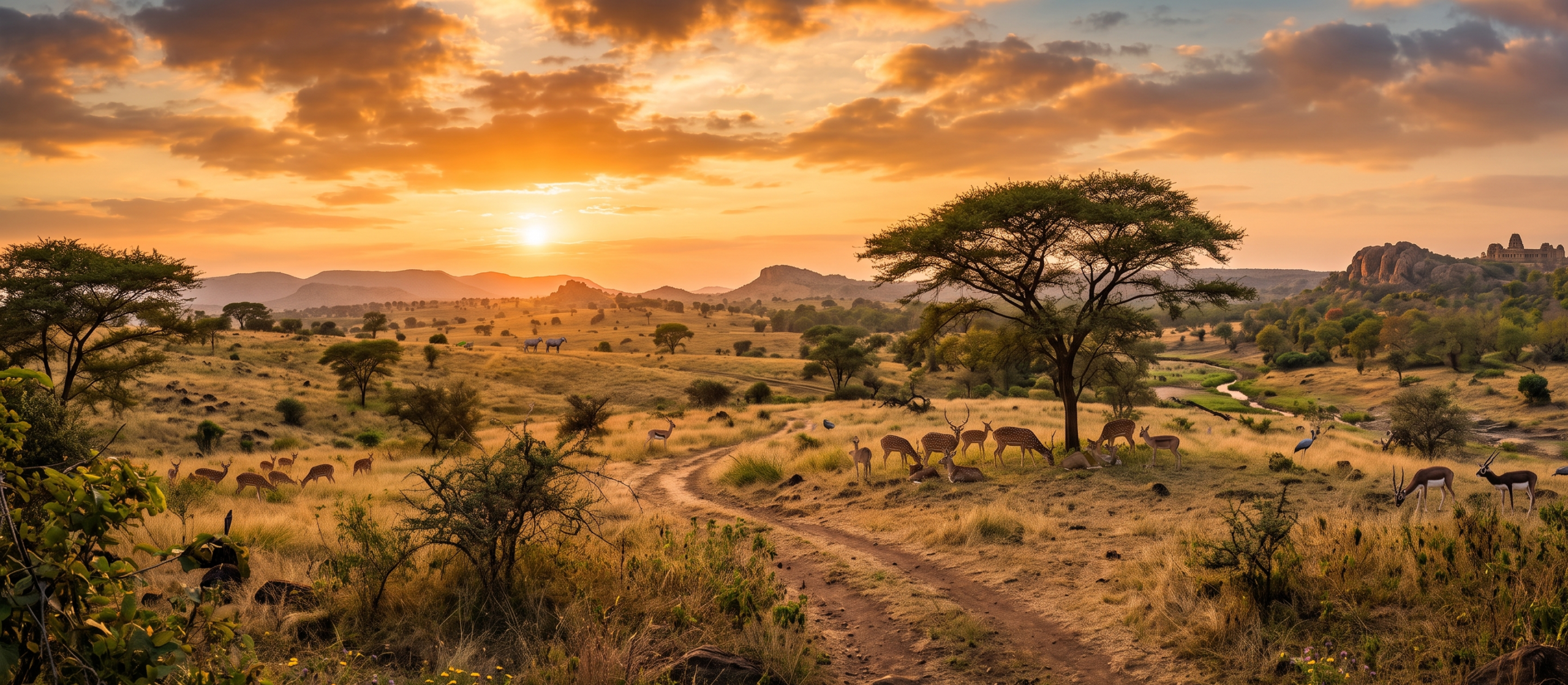
A dedicated Kuno Safari Guide to India’s wild savanna heartland. Spanning across the Vindhyan hills in the Sheopur, Shivpuri and Morena districts of Madhya Pradesh, Kuno National Park protects one of Central India’s most expansive savanna ecosystems. Blessed by the perennial lifeline of the Kuno River, the reserve combines dry deciduous woodlands, open acacia scrub, and vast rolling grasslands that offer unobstructed visibility for tracking wildlife. Historically revered as the royal hunting grounds of the Scindia dynasty and anchored by the ancient Palpur Fort, this pristine landscape underwent decades of dedicated habitat restoration before emerging as India’s definitive cheetah capital.
The History of Kuno & Project Cheetah Milestone
A Heritage Forged in Wilderness
Long before its global rewilding fame, the Kuno landscape was the private hunting preserve of the Scindia rulers of Gwalior. Perched silently along the Kuno River, the historic Palpur Fort stands as a stone testament to this royal past. Recognizing the ecological importance of its rare Kardhai and Khair dry deciduous forests, Madhya Pradesh formally declared the region a wildlife sanctuary in 1981 across 344 square kilometers.
1998–2003 (The Great Relocation)
Identified as an alternate home for Asiatic lions, leading to the voluntary and peaceful resettlement of 24 forest villages to create a contiguous, undisturbed savanna core.
2018 (National Park Declaration)
Upgraded to full National Park status to grant the highest legal protection to its surging herbivore population and reviving river ecosystem.
The Return of the World's Fastest Predator
In 1952, the cheetah was officially declared extinct in India. Exactly seventy years later, Kuno was handpicked as the epicenter for the world’s first intercontinental large carnivore rewilding program. Its open savanna terrain, low human footprint, and abundant chital and nilgai prey made it the natural choice to welcome back the fastest land mammal.
September 2022
Arrival of the first 8 African cheetahs, welcomed into custom-designed soft-release acclimatization bomas.
February 2023
12 additional cheetahs introduced to widen genetic diversity and establish sustainable wild coalitions across the park.
A Naturalized Future
Successful natural breeding with healthy cubs navigating the wild savanna, turning Kuno into India’s permanent cheetah homeland.
Safari Gates & Zones: Complete Kuno Safari Guide
Choose the right gate based on your route, terrain interest, and base camp accommodation. For official permit bookings referenced in this Kuno Safari Guide, carry valid government photo IDs for every passenger.
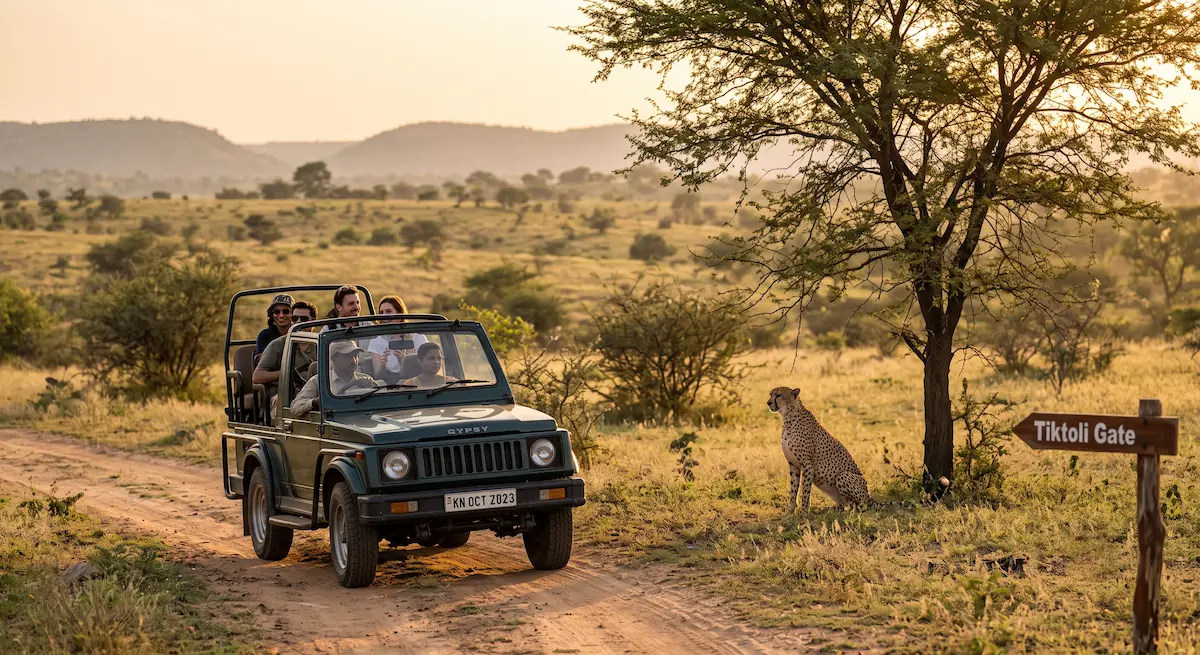
Tiktoli Gate
- Directly accessible via Sesaipura / Sheopur Highway.
- Palpur grasslands, river crossings, and central tracking corridors.
- First-time visitors and travelers staying at Sesaipura eco-resorts.
Ahera Gate
- Approached via Pohri and Shivpuri highway corridors.
- Expansive open savanna flats, plateau tracks, and golden hour lighting.
- Wildlife photographers and travelers
Peepalbawadi Gate
- Reached via the Morena and Agra village transit corridor.
- Rugged northern scrub, peaceful dense thickets, and riverbanks.
- Naturalists seeking quiet, low-density wilderness game drives.
Official Safari Shifts & Timings
Morning Drive
06:30 AM – 10:30 AM
Evening Drive
02:30 PM – 6:30 PM
Morning Drive
05:45 AM – 09:30 AM
Evening Drive
03:30 PM – 06:45 PM
Important Kuno Safari Guide Note: All park gates remain closed for afternoon drives on Wednesdays. Safaris operate annually from 1st October to 30th June, closing during the monsoon break (July–September).
How to Reach Kuno National Park
By AIR
Gwalior Airport (GWL) is approximately 160 km (~3.5 hours drive). Jaipur International Airport (JAI) is ~220 km away.
By Rail
Nearest major railway stations are Shivpuri (65 km) and Gwalior (160 km) & Sawai Madhopur (150 km), with daily trains from Delhi, Mumbai, and Bhopal
By Road
Well-connected via national and state highways linking Sheopur, Shivpuri, Kota, and Gwalior
Base Camp & Stay: Pohari and Sesaipura serves as the primary hospitality hub featuring eco-lodges, resorts, and homestays close to Tiktoli Gate & Ahera Gate
Turn this Kuno Safari Guide into your next wilderness journey with our local field team.
From official 4×4 open gypsy reservations and registered naturalists to seamless gate transfers and eco-resort stays across Tiktoli, Ahera, and Peepalbawadi gates — our local ground team brings this Kuno Safari Guide to life by taking care of every detail.